
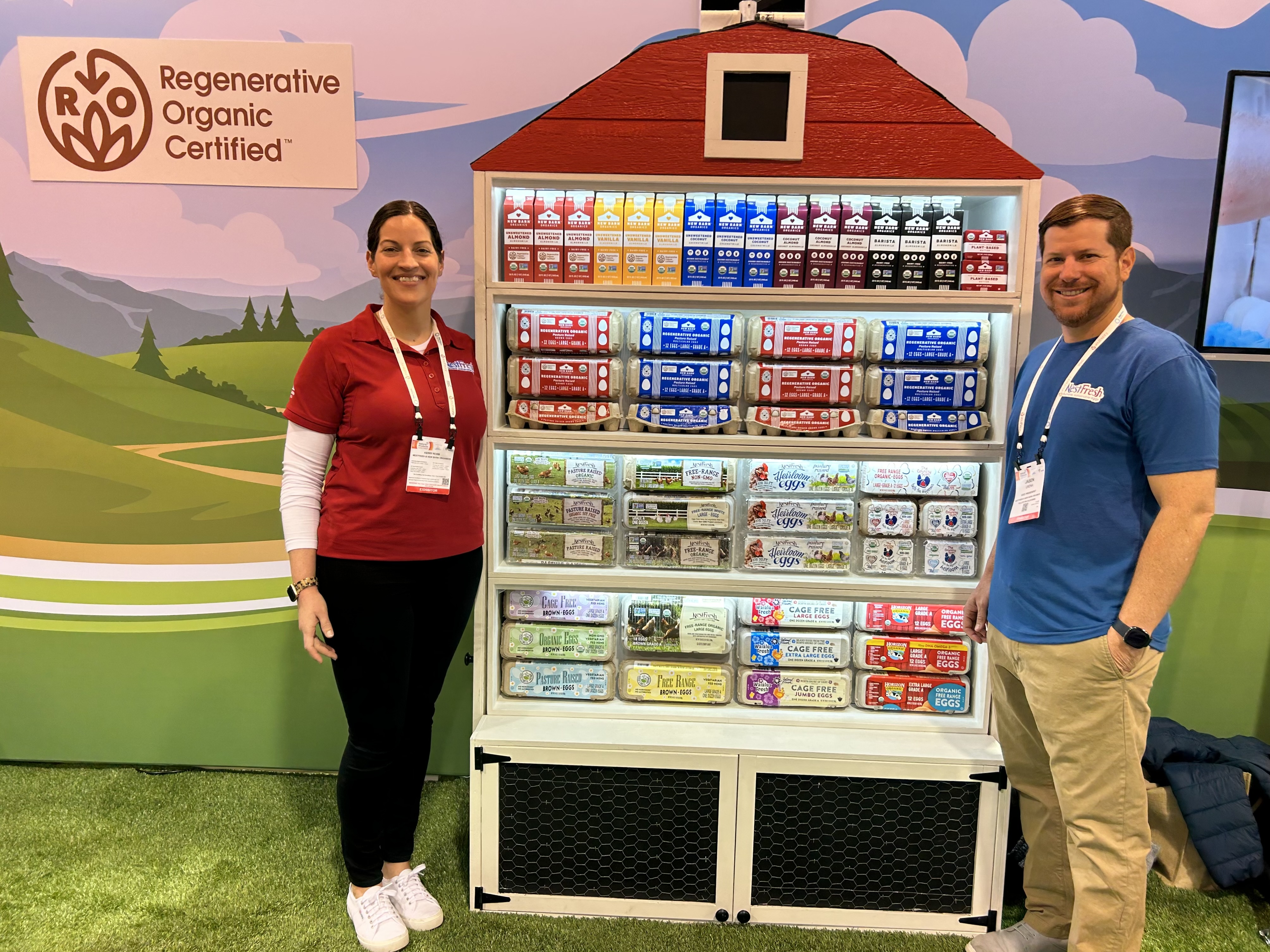
November 9 is World Egg Day. The holiday began in Vienna, Germany and is celebrated the second Friday of every October. The holiday is organized by the World Egg Organization to promote the nutritional benefits and versatility.
As The Appropriate Omnivore, eggs have another special meaning to me. It’s one of the earliest foods I remember enjoying. Even before steak. Back in 2011, I learned the benefits of cholesterol and saturated fat. I then realized how amazing of a food eggs are as the yolk has the highest amount of cholesterol in any food. Eggs are also a great source of vitamins A, B, D, E, and K plus as well as iron, phosphorus, potassium and calcium, choline. So I can now savor my eggs at breakfast time and not fear eating the yolks.
But as with all foods, it’s important to properly source your eggs and know the true meaning of the labels. There are many brands of organic eggs, but the organic label doesn’t say anything about whether or not the chickens where raised in confined spaces. It simply means the hens were given an organic feed. Even free range isn’t all it’s cracked up to. The only requirement for a free range label is the chickens have access to the outdoors, but they may never be let outside.
The minimum for finding nutrient dense eggs is a label of pasture raised. This means the chickens are given at least 108 square feet of pasture. However many of the eggs listed below go beyond this standard and into practices such as regenerative agriculture.
Organic is another important element to look for when choosing eggs. Feeds for the hens can often be sprayed with many harsh chemicals. While pasture raised and organic are important qualities, there a many more options for those than there were 20 years ago. So I recommend going a step further and purchasing regeneratively farmed eggs.
Regenerative agriculture consists of healthy soil, carbon sequestration, effective use of rain water, pollinator habitats, and biodiversity. Regenerative ag is not only better for the land, it’s better for the animals too as it involves animals constantly being rotated as to where they graze.
There are numerous regenerative certification labels. For meat products, many are certified by Land to Market. Land to Market’s roots can be traced back to biologist Allen Savory. Since the 1960s, Savory has been supporting regenerative agriculture and has introduced holistic planned grazing to ranchers throughout the world. In 2009, he founded the Savory Institute to further this mission. More recently Land to Market was spun off from the Savory Institute to certify products as regenerative. Land to Market uses a protocol known as Ecological Outcome Verification (EOV). EOV measures regeneration through the ecological indicators of ground covering, water infiltration, biodiversity, and soil & carbon health.
Another organization for regenerative certification is the Regenerative Organic Alliance (ROA). ROA is a joint venture between the Rodale Institute, Patagonia Provisions, and Dr. Bronner’s. They require products to be both organ certified and regenerative. ROA has three pillars to become Regenerative Organic Certified (ROC). The pillars are soil health, animal welfare, and social fairness.
The final certifier of regenerative agriculture for hot dogs on the list is Regenified. Reginified was co-founded by Gabe Brown, a North Dakota rancher and educator in regenerative agriculture. Reginified has a 6-3-4 Verification Standard which consists of 6 principles of soil health, 3 rules of adaptive stewardship, and 4 ecosystem processes.
While not specifically a regenerative certification, The Real Organic Project has requirements similar to the regenerative labels. The Real Organic Project’s three pillars are soil health, animal welfare, and ethical treatment of employees.
In alphabetical order, here are the 7 best regenerative eggs you can find in supermarkets:
Alexandre Kids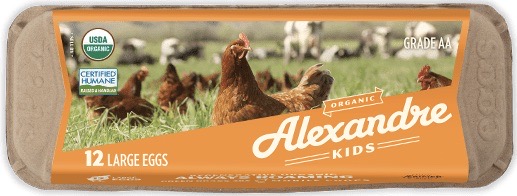
Alexandre Family Farm founders and 5th generation farmers Blake and Stephanie Alexandre began a dairy in 1988 in southern California, where Stephanie grew up. With Blake always wanting to return to northern California, they seized upon a farm was for sale in Del Norte County in 1992. This location was just two hours north of the original Alexandre farm in Ferndale. In addition to Blake returning to northern California, this was also the chance for both Blake and Stephanie to return to the practice of organic grass grazing cows like their grandparents did. More recently they’ve been certified regenerative by the Savory Institute‘s Land to Market and the Regenerative Organic Alliance program. Their cows are also A2. Along with dairy, they have eggs under the label Alexandre Kids as the children helped them start the egg business back in 2005. Their children are now adults and are 6th generation farmers working for Alexandre Farms.
Burroughs Family Farms 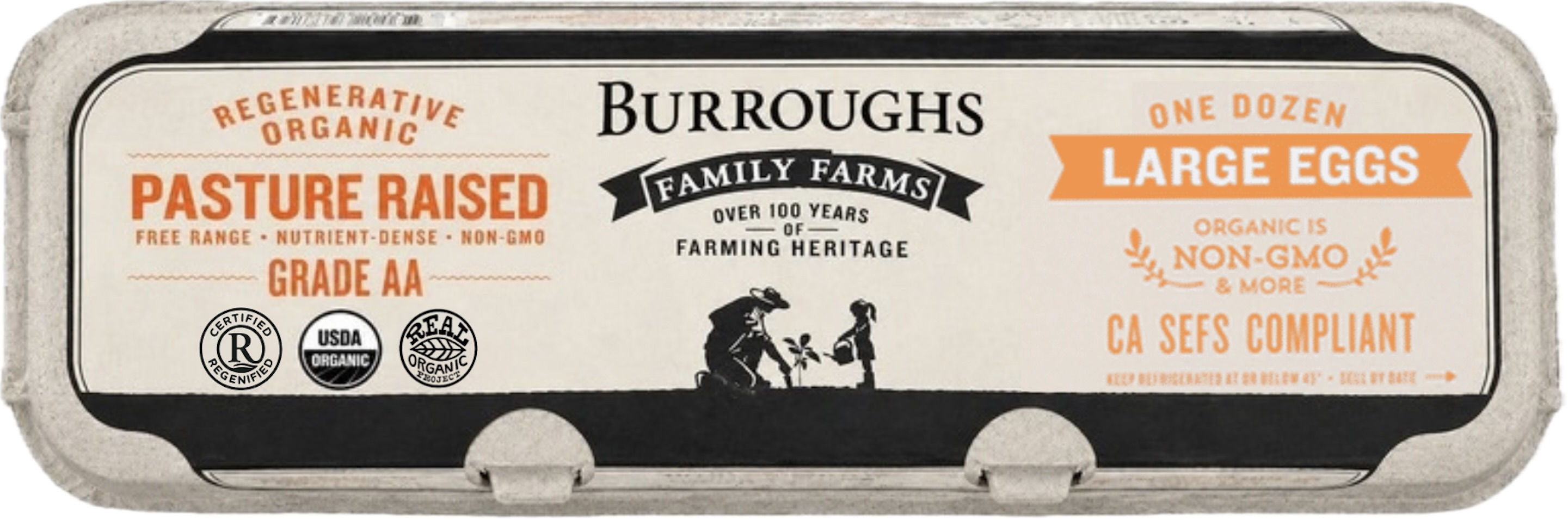
Available in supermarkets in Northern California: the Central Valley, the Bay Area and the Central Coast
In 1894, at age 19, Benjamin Randall Burroughs moved from Springfield, IL to Oakland, CA. Benjamin and his two brothers, Ernest and Willis, raised cows in the hills and bottled their own milk for sale. Four generations later, the farm is still run by the Burroughs family. Ward and Rosie Burroughs head the farm with their adult children in the northern San Joaquin Valley. While there are no more cows, Burroughs Family Farms has become well known for its almond and walnut orchards. More recently, Burroughs Farms added egg laying chickens and hope to one day offer their Regenified and Real Organic Project certified regenerative eggs nationally.
Happy Hens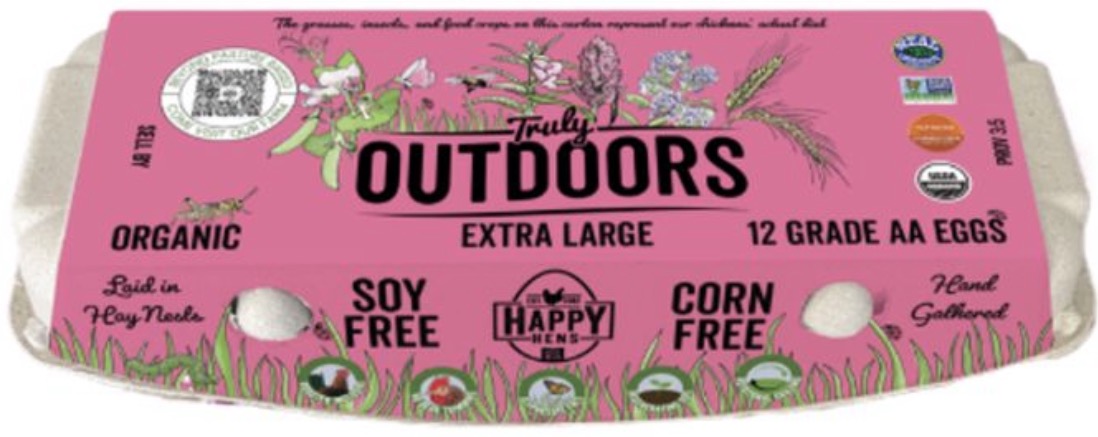
Available in supermarkets in Northern California: Available in supermarkets in Northern California: San Diego, Orange, and Los Angeles Counties
Happy Hens founder Luie Nevarez grew up on a ranch. Knowing back then that he wanted to be a farmer, he spent his mornings helping out his grandfather. Luie earned a degree in agriculture and business from Cal Poly opened Happy Hens less than a year after graduating, he opened up Happy Hens farm. Its mission was to provide the happiest and healthiest hens in addition to producing the most nutrient dense eggs while using sustainable, low impact methods of farming. A few years later, Luie hired his future wife Chloe, who now supervises animal health, sales, and marketing. Their Truly Outdoors label is part of The Real Organic Project.
New Barn Organics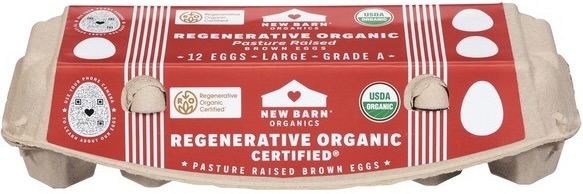
In 2015, New Barn Organics was founded as a company which wanted almond milk that tasted like it was homemade. So they began producing an almond with simple organic ingredients. New Barn has since expanded into regenerative organic certified pasture raised eggs. For this venture, New Barn partnered with NestFresh Eggs. New Barn co-founder Ted Robb said they chose NestFresh because of their devotion to regenerative agriculture and their belief that it’s important in creating a healthier food system for the generations to come. New Barn’s eggs are verified by the Regenerative Organic Alliance.
OrgaNick Pastures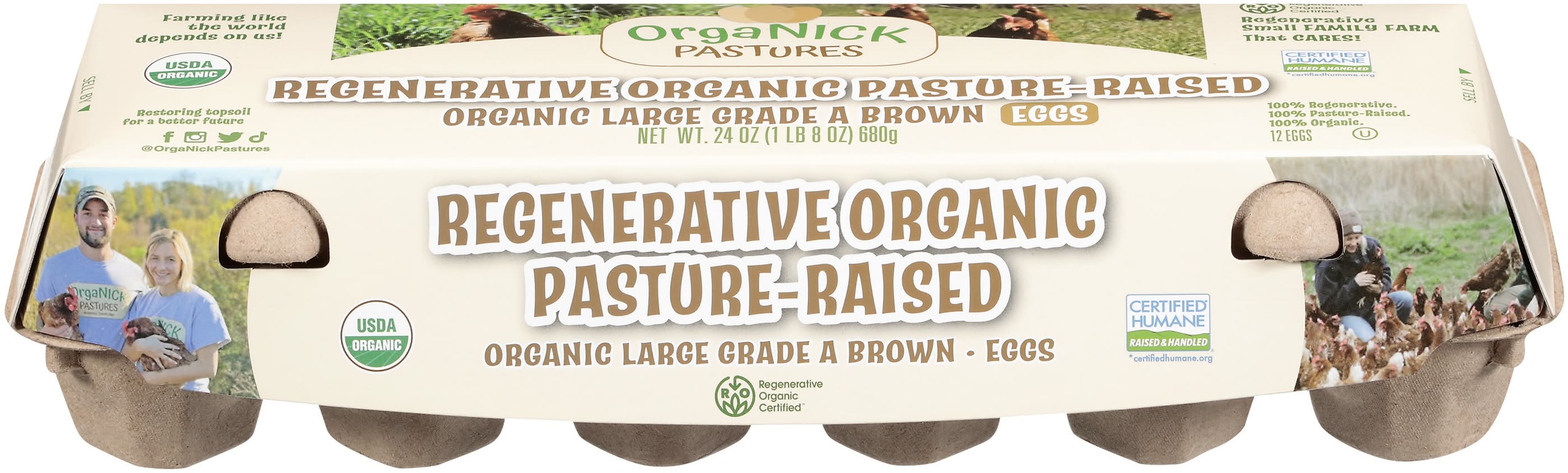
Nick Westby had always wanted to open Wisconsin’s first Certified Humane pasture raised egg farm. His career in agriculture first began in high school helping out at a chicken farm producing organic fertilizer and then working on a different farm while in college. In 2019, the dream of his own farm came true when he started one in Rio, WI. The farm’s commitment was to animal welfare, sustainability, and high-quality production. The location also include an on-site processing facility. A year later, Nick opened a second farm in Macellon, WI. OrgaNick Pastures is now a network of multiple family owned and operated farm across the region offering Regenerative Organic Certified eggs.
Vital Farms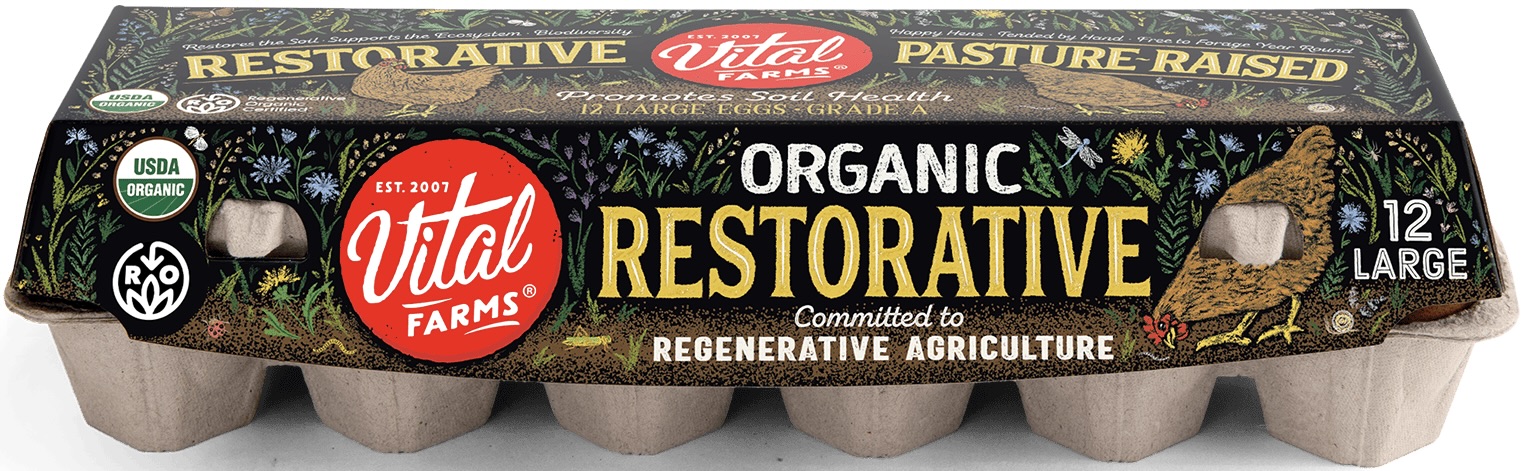
Vital Farms starts in 2007 with a 27 acre farm in Austin, TX. When Whole Foods discovered their eggs at a farmers market, they began selling them throughout their supermarkets in the midwest. Vital Farms began working with small farmers all over the country using the Vital Farms name on their products. They’re now partnered with over 100 family farms and are sold nationwide. Among their various lines of pasture raised eggs are the Restorative line which is certified regenerative by the Regenerative Organic Alliance.
Wilcox Family Farms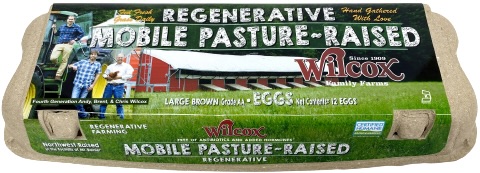
Wilcox Family Farms is over 100 years old and is currently run by the fourth generation of the Wilcox family. Their organic and sustainable practices date back to when the land was purchased by the family in 1909. Being along the Nisqually River in central Washington State, the family knew they had a responsibility to not use any chemicals or pesticide which could run off into the river. They also use locally grown feed for the chickens when possible.