
September 23 is celebrated as National Snack Stick Day to honor on-the-go snacks. Meat snacks, which snack sticks are included under, are the fourth highest selling product in the salty snack sector. Meat snacks are more popular than pretzels and popcorn. While snack sticks in concept are a real food, so many of the jerky products available to consumers use factory farmed meats and are loaded with GMOs and artificial ingredients.
For me, my memories of meat sticks are noshing on them while on vacation with my family and hiking in the state parks. As a kid, I have fond memories of these meat sticks. They had a nice flavor with their spices and seasonings. But the ones I ate were unfortunately among the unhealthy kinds.
I’ve had the pleasure of learning about many new meat stick companies using 100% grass fed meats at the conventions I’ve attended over the years. It’s delightful to hear that many of them founded their brands for the reason that they also saw only unhealthy snack sticks in stores. This trend continues to grow. And these grass fed sticks are no longer found exclusively at the natural foods stores. As I was driving up to the Bay Area last year, I noticed venison sticks at a convenience store off right off the I-5 going through the Central Valley of California.
Sticks with real meat and real ingredients can also be considered a traditional food. In fact, they use one of the oldest methods of preparing meat. As meat sticks are smoked, the concept of cooking meat over fire goes back to the earliest humans in existence. Fresh meats were subject to decay and insect infestation, so people began drying and smoking it to help it last longer. Meat sticks themselves likely evolved from the sausage, which can be traced back to Mesopotamia in 3100 BC.
Similar to how earlier cultures and civilizations used all kind of wild animals for their smoked meats and sausages, many of these new grass fed sticks are also using more gamey animals such as bison, venison, and elk. With all the grass fed options out there now, it’s a treat that I can eat meat sticks again.
We’re blessed with many options for grass meat sticks. In the past fews, some snack stick brands have gone the extra mile and used regenerative meats in their products. Regenerative agriculture contains both animals on pasture and coming from farms with healthy soil, carbon sequestration, effective use of rain water, pollinator habitats, and biodiversity.
There are numerous regenerative certification labels. For meat products, many are certified by Land to Market. Land to Market’s roots can be traced back to biologist Allen Savory. Since the 1960s, Savory has been supporting regenerative agriculture and has introduced holistic planned grazing to ranchers throughout the world. In 2009, he founded the Savory Institute to further this mission. More recently Land to Market was spun off from the Savory Institute to certify products as regenerative. Land to Market uses a protocol known as Ecological Outcome Verification (EOV). EOV measures regeneration through the ecological indicators of ground covering, water infiltration, biodiversity, and soil & carbon health.
Another organization for regenerative certification is the Regenerative Organic Alliance (ROA). ROA is a joint venture between the Rodale Institute, Patagonia Provisions, and Dr. Bronner’s. They require products to be both organ certified and regenerative. ROA has three pillars to become Regenerative Organic Certified (ROC). The pillars are soil health, animal welfare, and social fairness.
In alphabetical order, here are the 4 best brands of regenerative grass fed sticks:
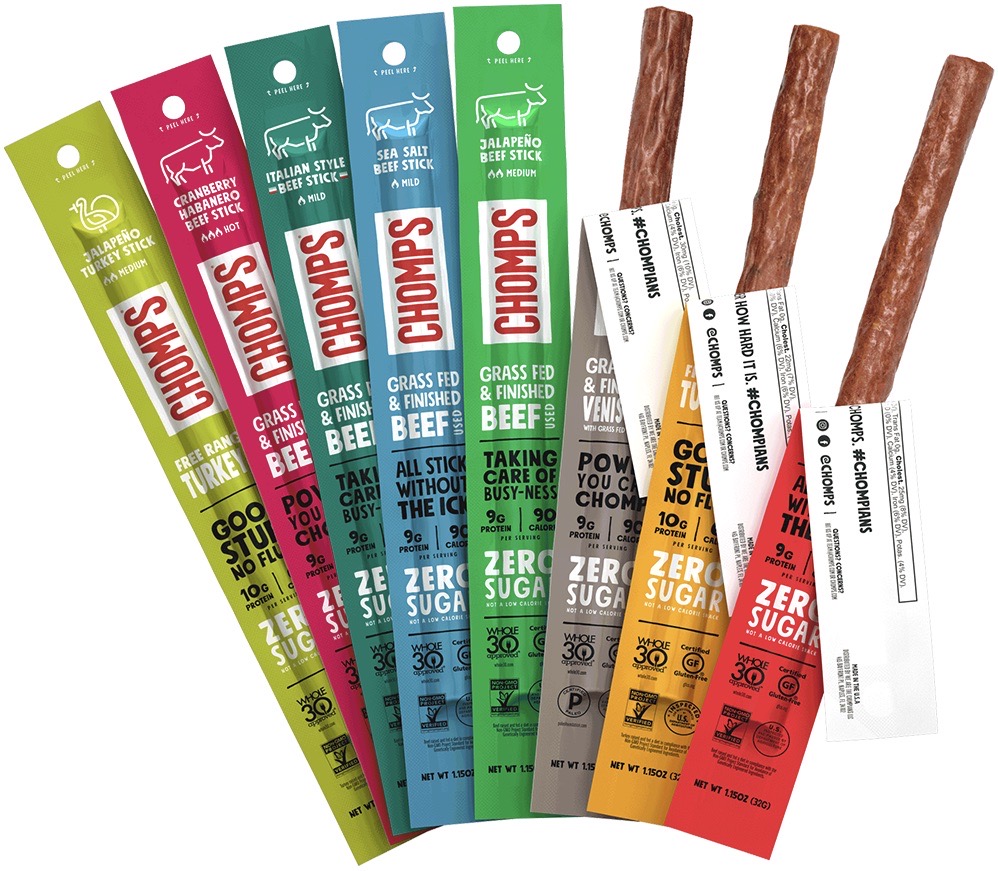
Chomps
Peter Maldonado and Rashid Ali founded Chomps when they were both single, young professionals who needed an on-the-go protein. They saw a lot of conflicting information in terms of what healthy food is and realized others were having problems knowing what was good for them. Peter and Rashid then figured they could make it easy for everybody by providing basic snacks sourced with high quality proteins and no secret harmful ingredients. Now both of them have families and they’re able to share their healthy snacks with their kids as well. They produce beef sticks of various flavors along with some venison and turkey sticks.
REP Provisions
REP Provisions is a network of verified regenerative farms and ranches certified by the Savory Institute‘s Land to Market . All of the farms they partner with go through thorough scientific testing to measure the soil health, sequestered carbon, water quality, and biodiversity. In addition to being regenerative, they’re certified by the Audobon Society to be bird friendly. And for every meat box, sold, REP plants 100 milkweed seeds on their ranches to restore monarchs migration corridors. Through the REP website, consumers can order regeneratively raised beef, chicken, pork, and lamb. Their beef products include their beefstix.
Starwalker Organic Farms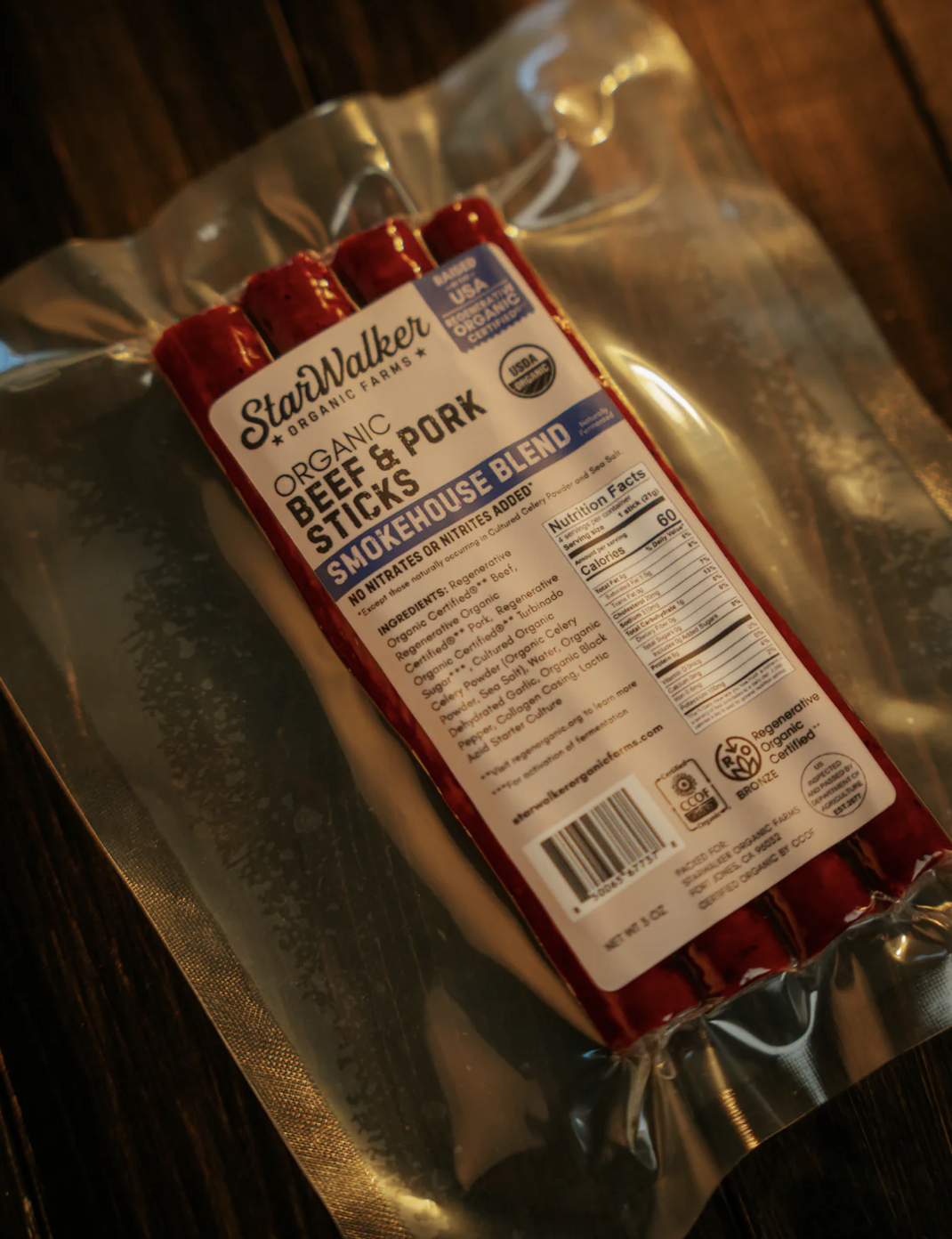
In 1970, the Walker family purchased a farm in the Marble Mountains. About a decade later, the family’s hard work and dedication led to Starwalker Organic Farms becoming one of the first certified organic farms in the United States. The farm is now run by the third generation of the family, with the four generation helping to take care of the land, and is Regenerative Organic Certified. Starwalker sells a wide array of regenerative beef, pork, and chicken products. They also produce a smokehouse blend of beef & pork sticks.
Thousand Hills
Matt Meier worked for 20 years in conventional food marketing before he returned home to the farm he grew up on. In 2003, he founded Thousand Hills with the mission of nourishing the soil, the plants, cattle, and people by holistically grazing cattle for their entire lives. His home farm in Clearwater, MN is one of the 13 Savory Institute hubs in North America as the ranch is a leader in holistic and regenerative grazing practices. Thousand Hills now sources cattle from other family farms which they’ve hand picked for their similar deep commitment to regenerate land and having nutrient rich beef as a result. The farms range from the midwest, northeast, and west regions of the United States. Already 600,000 acres of land has seen positive benefits. Beef sticks are part of a diverse amount of products which can be found from Thousand Hills, such as jerky, bone broth, chili, ground beef, hot dogs, sausages, steaks, and roasts. All of their products are now Land to Market certified regenerative.