Another Super Bowl is coming up. And while the Super Bowl is about football, it’s also about the musicians performing at the Halftime Show, and the great commercials… and of course, all of the great food served at Super Bowl parties. Over 100 million people will be throwing parties to watch the big game. At these parties, hosts will be serving smorgasbords of everybody’s favorite treats.
I throw a Super Bowl party every year. I love doing so, because it combines two of my favorite things: football and food. For me, it’s a great way to demonstrate how sustainable food can be fun. For the past few years, I’ve been releasing articles around the Super Bowl about my favorite snack foods. What originally began as one article has expanded into a series covering different types of snack foods in each one. As the options for better snack foods grow, I’m able to separate subcategories into their own articles.
I kick off the series of Super Bowl snack foods with potato chips. Chips, in general, are the most popular foods of all found at parties for the big game. The salty snack industry rakes in $278 million on potato chips for Super Bowl Sunday. But the next day, many Americans pay the price for the Standard American Diet. Antacid sales go up 20%. And 1.5 million people call in sick to work.
Potato chips weren’t always a highly processed food. For a long time, potato chips remained artisan and local, because they couldn’t keep fresh for too long. The chips were typically placed in a paper bag sealed with a paper clip. They would go stale in day. All of this changed thanks to one person.
During the Great Depression, Americans were trying to find cheap calories for the families to consume. Candy had seen a big boom, but the salty snack industry was barely on the radar. Only small local producers were offering snacks such as pretzels and popcorn. One company in Tennessee called the Barrett Snack Food Company and known for crackers and pretzels was struggling to keep its lights on. Then entered an employee named Herman Lay.
Herman Lay was a salesman and businessman who had trouble in the past year finding consistent work. An idea came to his head when the Dust Bowl was taking place. Farmers were struggling to grow their usual crops as they their top levels of soil were blowing away. Now potatoes and corn had become commodities. Potato prices decreased significantly and Herman discovered the then unknown snack of potato chips.
When the founder of the Barrett Snack Food Company passed away, Herman Lay offered to buy the company. He took out to a loan which was 12 times what his life savings were. Herman’s next challenge was to find a way to keep the potato chips fresh.
Herman Lay discovered a paper known as glassine, a smooth translucent paper which is resistant to moisture, dust and grass. Glassine had been used to preserve stamps and photographs. Herman worked with an engineer who designed a sealable bag.
During World War II, Herman Lay experienced trouble as the government was seizing all materials for military use and shutting down nonessential businesses, such as his. Herman was successfully able to lobby Congress to recognize potato chips as an essential food. He said they’re both non-perishable and readily available to eat should there be a blackout where you can’t cook. As sugar was rationed during WWII, candy prices went up. Salty snack now were making headway into the profits of the candy industry.
Herman Lay was first selling his products only in the east, but eventually worked his way to get his potato chips available in the west. To expand sales, he introduced seasoned chips in the 1950s, starting with barbecue and adding on other flavors as time went on. As plastic bags became more common with packaging, they replaced the glassine bags.
With the many changes we’ve seen with potato chips from being artisan to mass produced and from paper to glassine to plastic, we’ve also seen them going from using real ingredients to denatured ingredients. One of the worst changes to potato chips was the use of seed oils such as canola, corn, and soybean oil. Another problem was non-organic ingredients sprayed with multiple pesticides.
When I started this blog in 2011, I knew of one seed oil free potato chip brand. Over the years, there’s been a huge growth in chips using clean ingredients again, including healthy oils such as avocado, olive, coconut, and palm oil. Now tallow is having moment. While some may see this related to politics, movements such as the Weston A. Price Foundation and the paleo community have been advocating for tallow long before. These groups consist of people from all over the political spectrum. So I recommend tallow from the point of view of an ancestral health advocate and nothing more.
In addition to cooking in tallow, the potato chips brands I recommend are also free of iodized salt, additives, and fillers. Many of these brands stick to the three basic ingredients of potatoes, tallow, and sea salt. Serve any of these chips below at your Super Bowl party this year and you’ll score a touchdown.
In alphabetical order, here are the 10 best beef tallow potato chips:
Beefy’s Own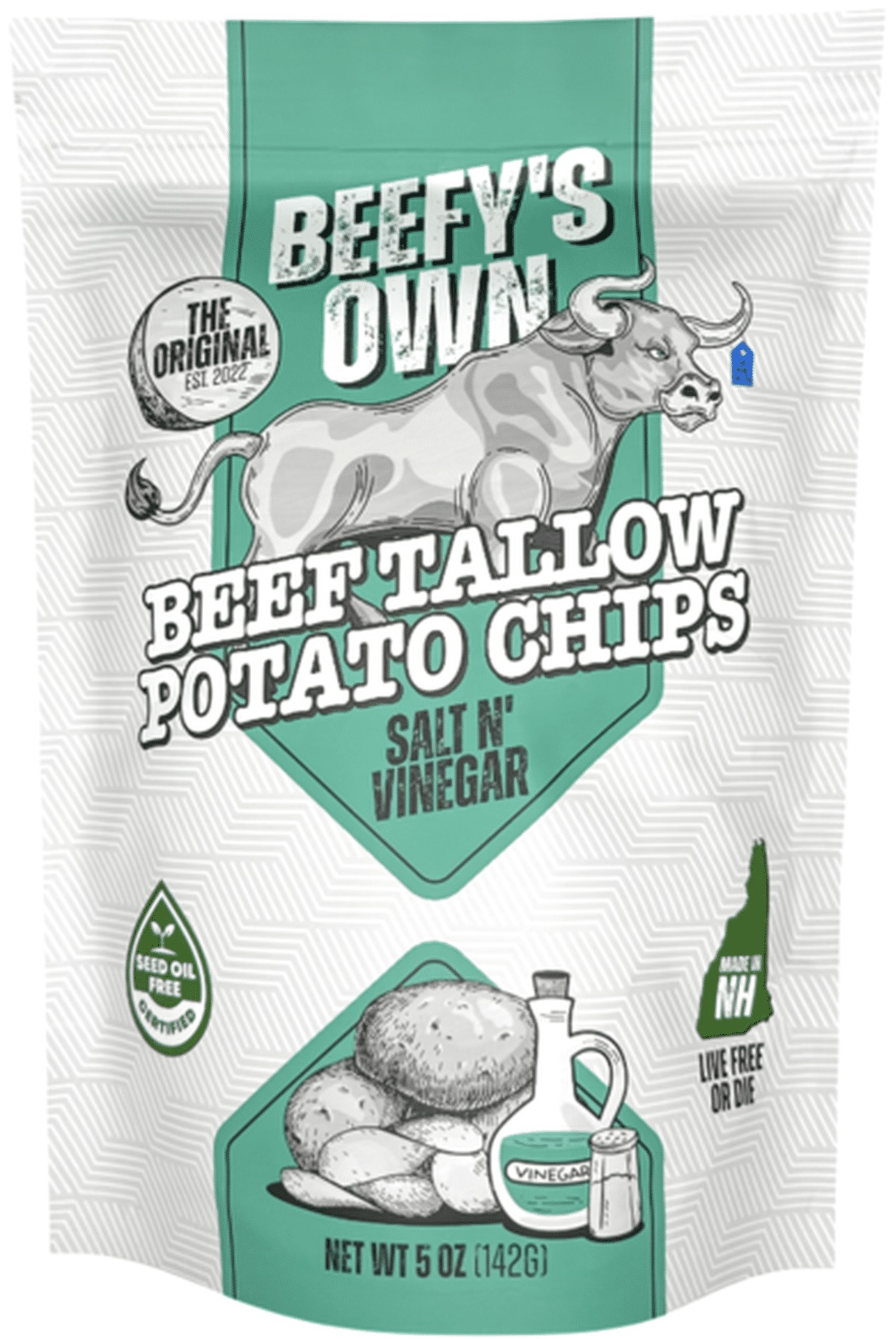
The origin of Beefy’s Own begins in 2020 when the founder’s family decided improve their health and commit to a holistic animal based diet. This meant cutting out seeds oils, which would unfortunately also meant no potato chips. So they decided to make their own, using tallow. They then shared the chips online and realized there was large demand for tallow fried potato chips. In 2022, Beefy’s Own made the chips in small batch. When 2023 came around, they found a dedicated production facility in order to sell their products nationwide. The flavors of Beefy’s Own are sea salt, salt n’ vinegar, salt n’ pepper, sour cream & onion, and BBQ.
Fat of the Land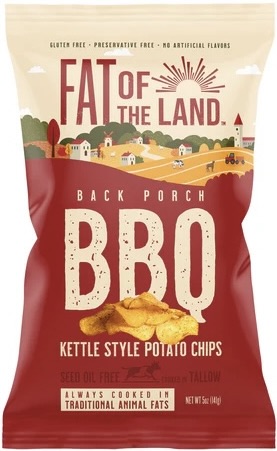
Fat of the Land was founded by parents who knew all about the temptation of potato chips as they’re quick and convenient. The founders’ problem was most of them contained seed oils. Knowing about the health issues from the oils, they never gave their children snacks with them. So they created a snack they could feel good about. Their idea was snacks cooked in animal fats consumed for thousands of years. In addition to animal fats, Fat of the Land prioritizes sustainable and ethical sourcing. They value being good for the earth as much as being good for people’s health. Fat of the Land’s potato chips come in sea salt and BBQ.
Norse Roots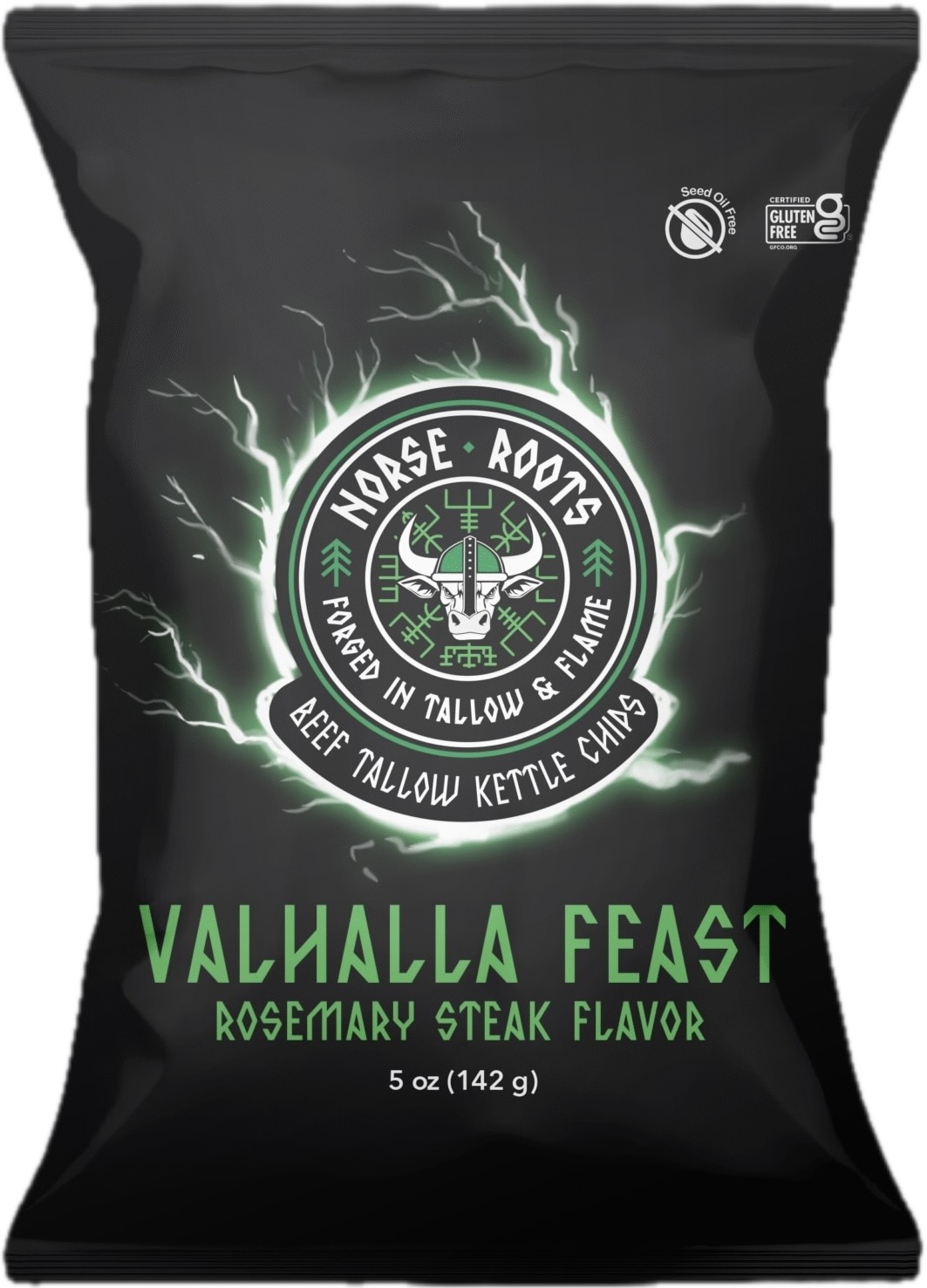
Inspired by Norse and Viking Cultures, the founders of Norse Roots believed that snacks should both taste great and nourish. After discovering the unique properties of beef tallow and its significant role in ancient diets, the founders started cooking beef tallow potato chips. Their tallow comes from suppliers who share their commitment to sustainable and ethical practices. Norse Roots has a wide option of flavors all with clever names. These flavors are original (sea salt), Valhalla feast (rosemary steak flavor), smoky mischief (honey barbecue), sea storm & pepper (salt & pepper), viking funeral (cheddar & sour cream), and berzerker (spicy all-seasoned).
Rancher’s Chips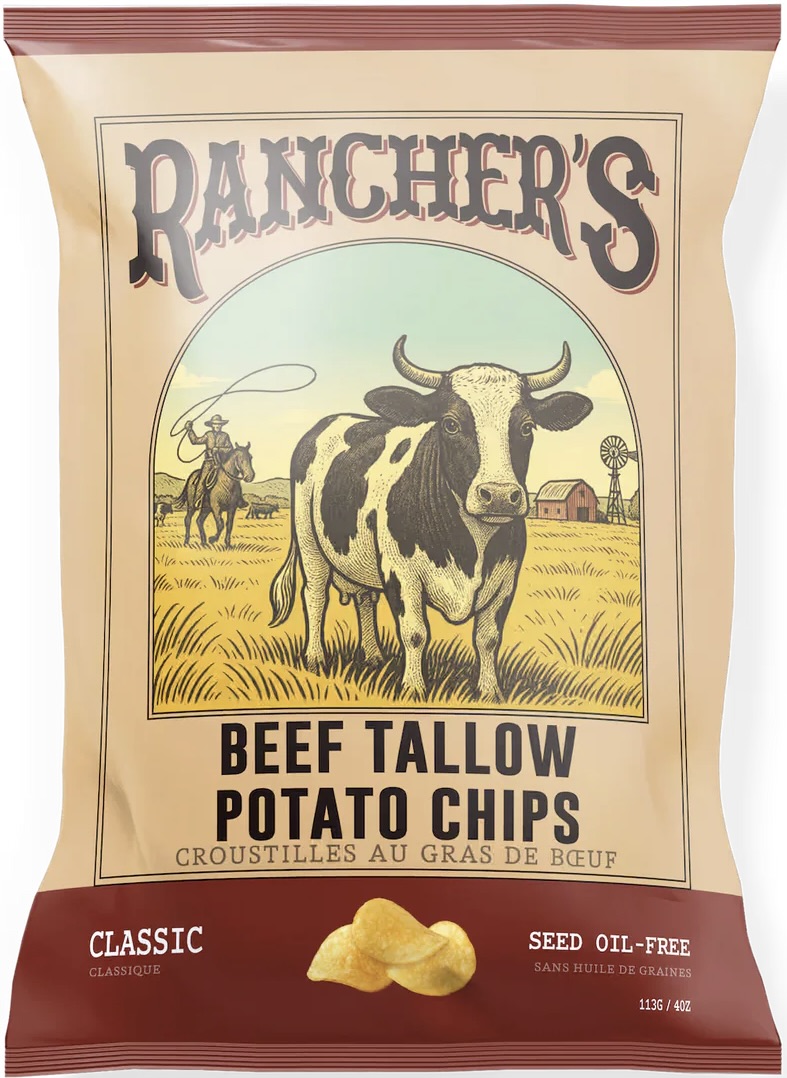
The roots for Rancher’s Chips involve a group friends on a camping trip in Bobcaygeon, Ontario. As they were sitting around a campfire, they discussed their love of potato chips and their frustration over all of the bad ingredients the chips had become loaded with. They questioned if these ingredients were necessary. After searching for seed oil free chips with minimal ingredients, they found very few offerings. And the ones they did see were too expensive for daily needs. So they fried potatoes into chips themselves, doing it the way chips used to be cooked. They stuck to three ingredients: quality potatoes, beef tallow, and salt. To make their dream become a reality, Rancher’s partnered with an established, family-owned potato chip company in Ohio.
Roots Potato Chips
Roots Potato Chips‘ mission statement is to source the best ingredients, healthier oils, and farm fresh potatoes while being transparent at every stage. Their Idaho grown potatoes use methods of regenerative agriculture, including cover crops, pollination, crop rotation, soil health, composting, and animal integration. They’re certified regenerative by the Soil & Climate Initiative. Roots reduces its food waste by using the entire potatoes, skin and all. They’re also certified plastic neutral by rePurpose as they support global waste recovery projects to fund the recovery of the same amount of plastic waste as their footprint while supporting waste workers. They include a QR code to learn about the farmer where the potatoes came from in that specific bag. Roots began with avocado oil potato chips and more recently added 100% grass fed beef tallow chips to their line. Their tallow chips come in sea salt with the choice of regular or purple potatoes.
Rosie’s Chips
Being originally from Central Pennsylvania, the potato chip capital of the world, Rosie’s Chips began with a vision of introducing to the world an all natural potato chip using the simple three ingredients of potatoes, grass fed & finished beef tallow, and microplastic free sea salt. The chips are kettle cooked in small batches. The name Rosie’s Chips comes from 102-year-old Central Pennsylvania icon Rose Adams, who raised the founders’ family and was known for her delicious comfort foods and snacks.
Stella & Milos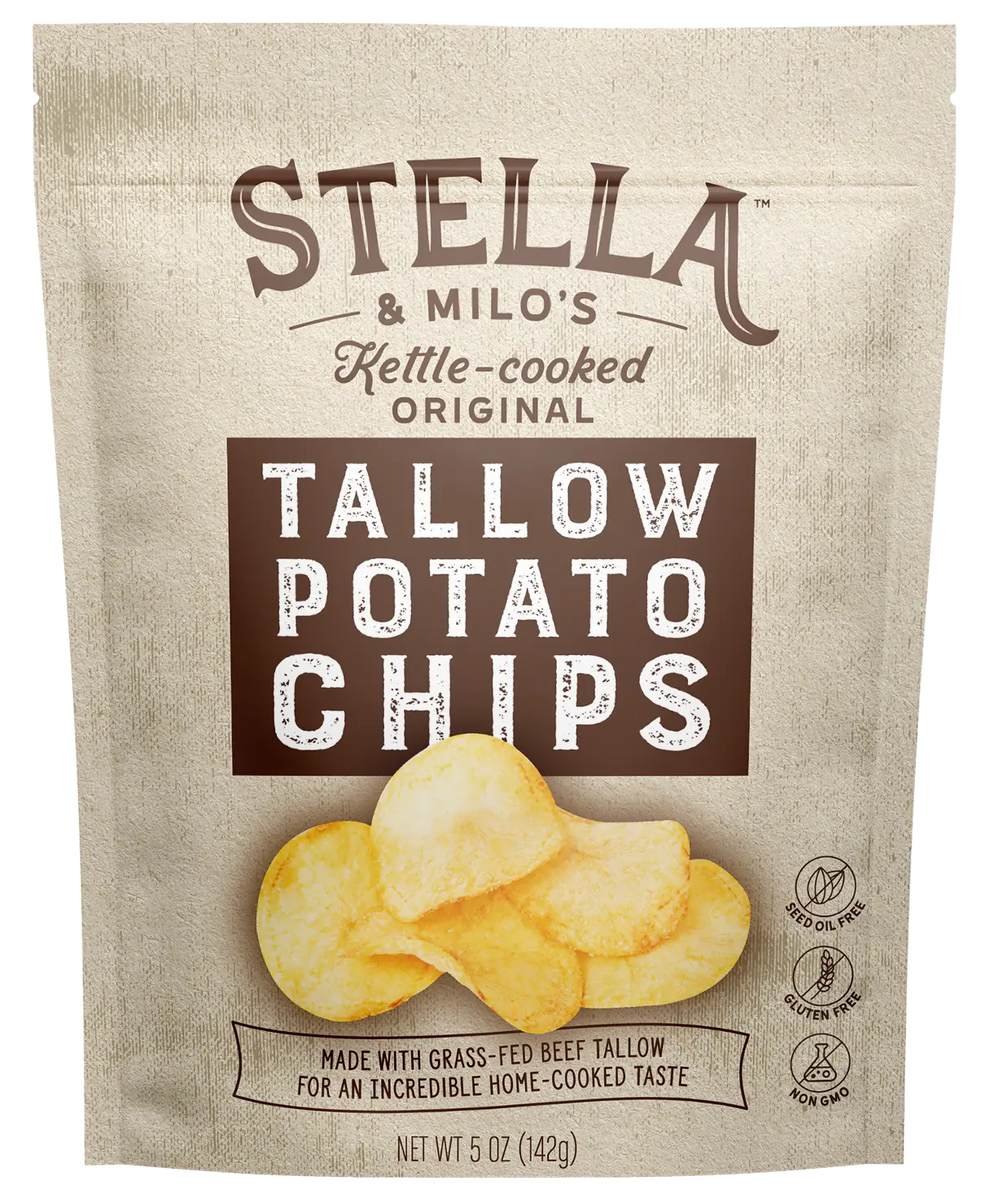
The name Stella & Milo’s refers to the founder’s dogs. Whenever they would open a bag of chips, their dog Stella wandered over in hopes that they’d share the chips. As they learned about the chips’ additives and how the chips were processed, the founders knew it was time to concoct something better. So the founders set out to make potato chips the way they used to be done. This meant kettle cooked chips from the three simple ingredients of potatoes, grass fed beef tallow, and mineral-rich salt. Their current dog Milo now continues the tradition of being their most enthusiastic taste tester.
Tasty Nate’s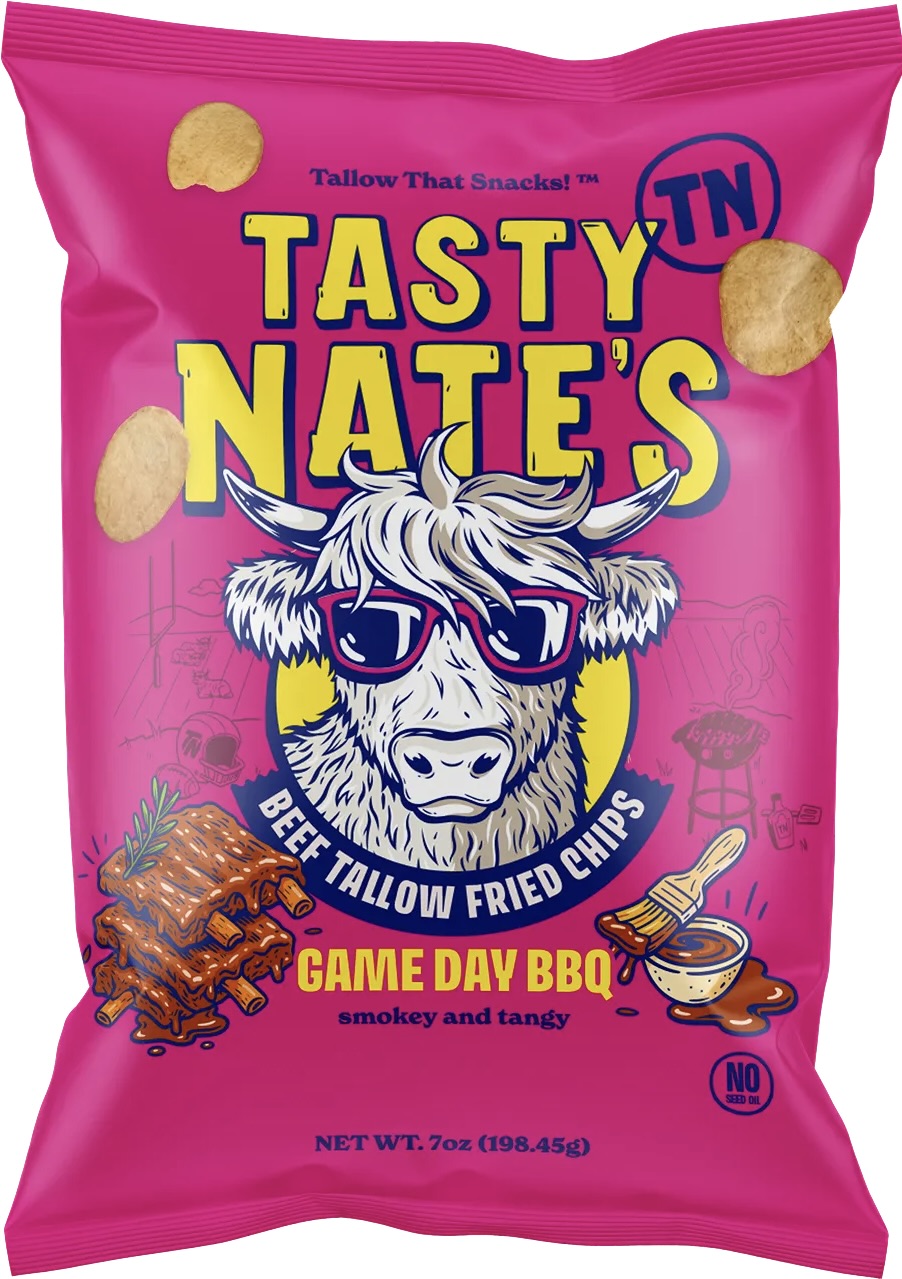
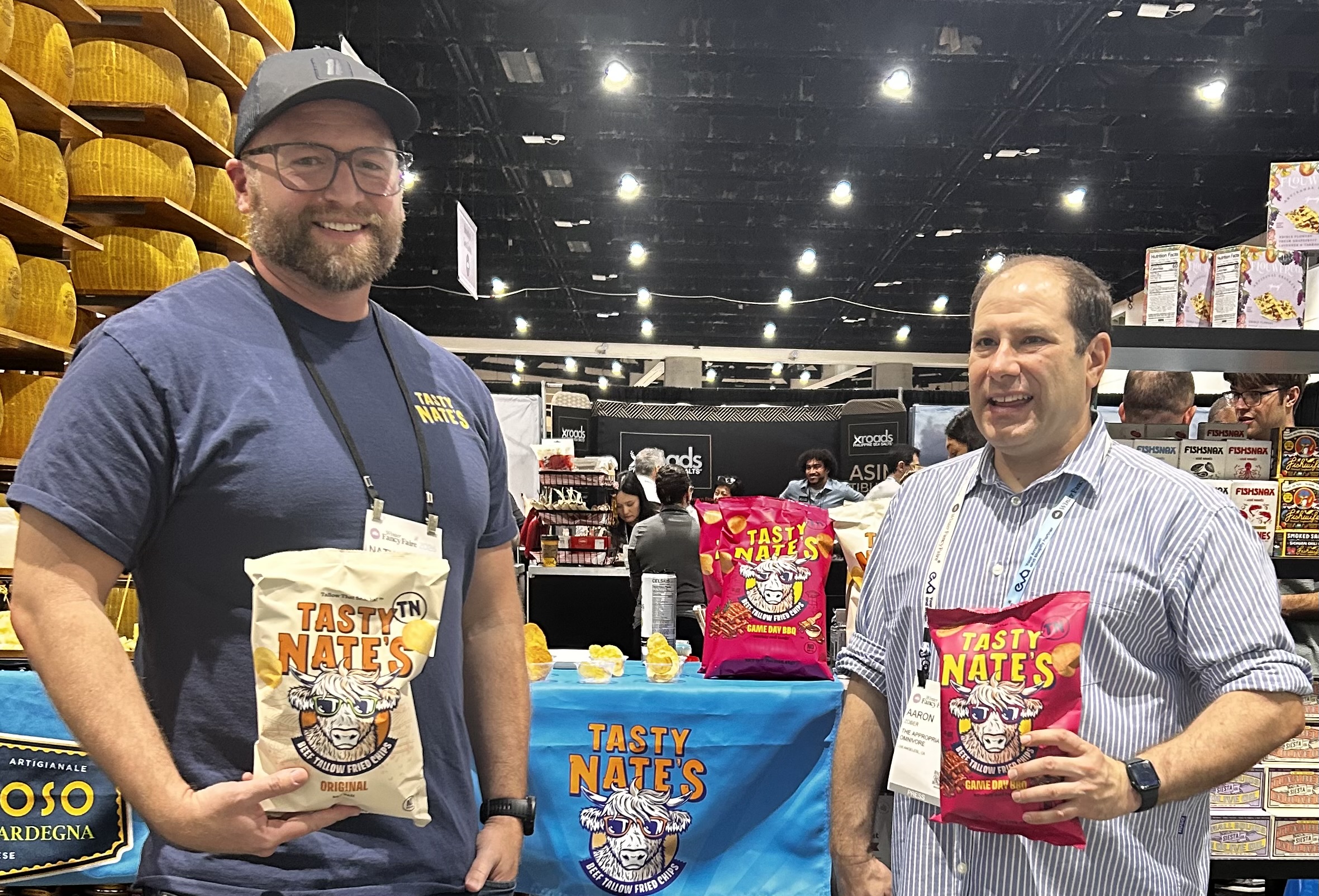
Nathan Childs had a bold vision to revolutionize the snack industry with seed oil free potato chips. So Nathan started Tasty Nate’s, which offered potato chips with the three basic ingredients of potatoes, beef tallow, and sea salt. His chips are not only seed oil free, but also avoid any fillers or hard to pronounce ingredients. Along with the original flavor, Tasty Nate’s also has game day BBQ and summer burger.
Tips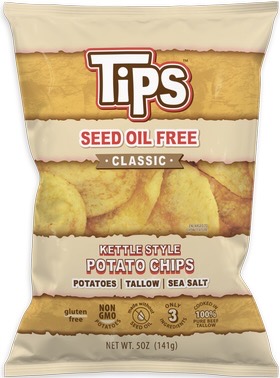
Tips came about as wherever its founders looked for snacks, they were cooked in seed oils. The founders were health conscious and wanted a chip they could trust. So they began frying ones themselves; using beef tallow instead of seed oil, sourcing real, quality ingredients, and cooking the potato chips kettle style. Tips can be found in the varieties of sea salt, salt & vinegar, and jalapeño.
Vandy
Unsatisfied with all of the chips on the market, Ancient Crunch founder Steven A. set out to create a chips with two simple requirements. First, the corn must be naturally grown and the tortillas must be naturally prepared. Second, the tortillas need to be free of any inflammatory seed oils. So he came up with MASA, the first tortilla chips made with both organic corn and grass fed tallow. After MASA, Steve followed up Vandy, potato chips cooked with out seed oils, pesticides, or other additives. He uses the three basic ingredients of potatoes grown naturally and free of CIPC, grass fed & finished tallow, and unrefined sea salt. Vandy comes in original, French onion, herbs de Provence, and smokehouse BBQ.